AI-Generated Product Images: Where They Help Your Listing and Where They'll Burn You
AI image tools have made it trivially cheap to generate backgrounds, drop a product into a lifestyle scene, or spin up a dozen creative variations in the time it used to take to brief a photographer. For a budget-conscious seller that's tempting — and in some places it's a legitimate shortcut. But product imagery on a marketplace isn't art; it's a representation of a thing a shopper is about to pay for, and Amazon holds you accountable for accuracy. The useful question isn't 'is AI good or bad' — it's 'which image slots can AI safely help with, and which ones will get me a return, a complaint, or a policy strike.'
Where AI genuinely helps
Used on the right tasks, AI tooling saves real time and money without misleading anyone.
- Background removal and clean white mains — turning a decent product photo into a compliant, pure-white main image is fast and low-risk when the product itself is real and unchanged.
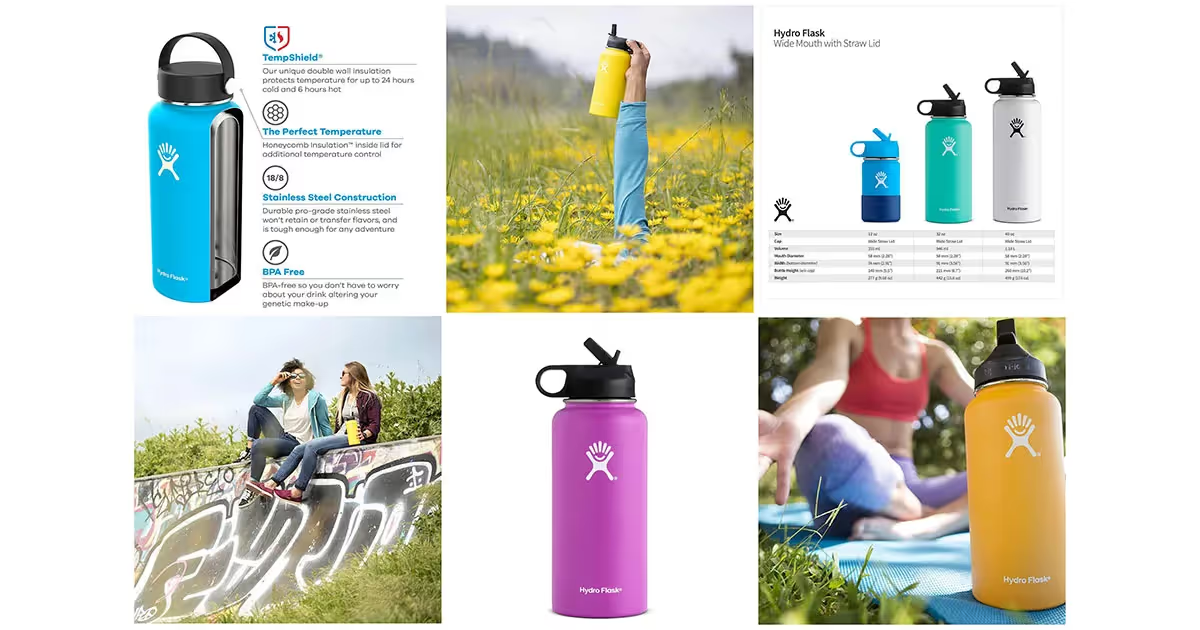
- Lifestyle and context scenes — placing an accurately photographed product into a plausible setting to help shoppers picture using it, as long as the scene doesn't imply features the product lacks.
- Concept and layout drafts — sketching infographic layouts, comparison-chart designs, or A+ module ideas you then finalize with real assets.
- Variation mockups for testing — quickly generating alternative compositions to decide a direction before committing to a proper shoot.
- Copy and alt-text support — drafting callout text or descriptions that a human then checks for accuracy and tone.
Where it crosses the line
The danger is using AI to depict the product itself in ways that aren't true. If a generated image makes the product look like a different color, a different size, a higher-quality material, or shows it including parts that aren't in the box, you've created a misleading listing — and that drives returns, one-star reviews, and potential policy action regardless of how the image was made. Amazon's accuracy standards don't care about your tooling; they care whether the customer gets what the images promised. AI also has a habit of inventing plausible-looking details — an extra port, a logo, a texture — that simply don't exist on the real unit. Every generated image that depicts the product needs a human to confirm it matches reality.
Disclosure and the rules are moving
Treat the policy landscape as a moving target. Marketplaces and regulators are actively working out disclosure expectations for AI-generated and synthetic imagery, and platform tools that generate images may apply their own labeling. The safe posture is conservative: don't use AI to fabricate the product's appearance, keep your real product shots genuinely real, and assume that anything misleading will eventually be caught — by a returning customer if not by the platform. Building on accuracy now means you won't have to scramble to rebuild a catalog of dubious images when the rules tighten.
A practical workflow
Here's a sane way to use these tools. Photograph the actual product accurately — that's your source of truth and your main image. Lean on AI for the supporting work: cleaning backgrounds, drafting layouts, mocking up lifestyle contexts, and generating test variations. Then put a human accuracy check between every generated image and your live listing, asking one question: would a shopper who received the real product feel this image was honest? If yes, ship it. If you're not sure, don't. The speed AI offers is only an advantage if it doesn't quietly raise your returns.
Make sure flashier images are actually adding profit, not returns.
Explore the profit toolsFrequently asked questions
Is it against the rules to use AI-generated images on Amazon?
There's no blanket ban on the tooling, but the accuracy and content standards still apply fully. The problem isn't that an image was AI-generated — it's if the image misrepresents the product. Disclosure expectations for synthetic media are also evolving, so the cautious approach is to never use AI to fabricate how the product looks and to keep your representative shots truthful.
Can AI replace a product photographer entirely?
Not for the shots that depict the actual product. You still need accurate photography of the real unit, because that's what the customer is buying and what you're held accountable for. AI is best at the surrounding work — backgrounds, lifestyle context, layout drafts, and variations — with a human verifying that anything showing the product is faithful to reality.