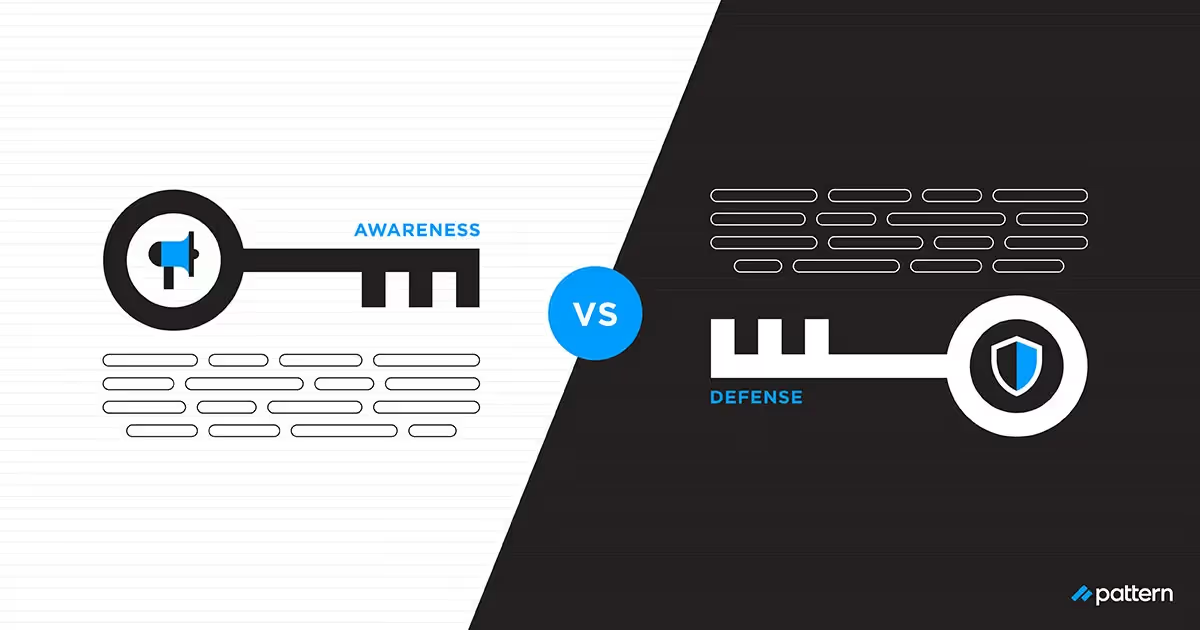
Offense vs. Defense: How to Split Your Amazon Keywords Into Two Jobs
Most sellers manage their Amazon keywords as one undifferentiated pile — a long list of terms, each with a bid, all judged by the same ACoS target. That's where a lot of wasted spend hides. In practice your keywords are doing two completely different jobs. Some are out hunting for shoppers who have never heard of you. Others are standing guard over searches you already win, making sure a competitor doesn't snipe a customer who came looking for *you*. Those two jobs deserve different bids, different success metrics, and different patience. Once you sort your keywords into offense and defense, half the confusion about "what's a good ACoS" disappears, because you stop holding two different missions to one number.
What offense keywords are for
Offense — sometimes called awareness or acquisition — is about reaching shoppers who don't yet know your product exists. These are generic, category-level searches: "stainless water bottle," "toddler night light," "resistance bands." The shopper has intent but no loyalty, and you're competing for a brand-new customer against everyone else in the category. Offense keywords tend to convert at a lower rate and cost more per sale, because you're paying to interrupt someone who wasn't looking for you specifically. That's not a failure — that's the price of growth. The mistake is judging an awareness term by the same ACoS you'd expect from a customer who typed your brand name. You'll kill your growth engine trying to make it as efficient as your defense.
What defense keywords are for
Defense is about the shoppers already heading your way — people searching your brand name, your product name, or terms so specific to your item that they're effectively looking for you. These searches convert at a high rate and cost little, because the shopper has already decided. So why pay to advertise on them at all? Because if you don't, someone else will. Competitors routinely bid on rival brand terms to intercept that warm, decided traffic, and an unguarded brand search is an open door. Defending your own terms is usually the cheapest, highest-converting spend in your whole account — and a few cents to keep a competitor's ad off your customer's screen is almost always worth it.
The two jobs, side by side
Keeping the distinction concrete makes the budget decisions easy:
- Offense — generic, category, and competitor terms. Goal: find new customers. Expect higher ACoS, lower conversion, and a longer payback that you justify by organic rank and lifetime value, not the single sale.
- Defense — your brand name, product name, and near-exact terms. Goal: protect decided shoppers. Expect very low ACoS, high conversion, and a near-instant payback — this is efficiency spend, not growth spend.
- Different budgets — fund defense first because it's cheap and protective, then pour the discretionary budget into offense where the growth is.
- Different metrics — judge offense on new-to-brand sales and rank lift; judge defense on share of your own branded searches and the cost of holding them.
- Different patience — give offense weeks to prove itself; defense should look efficient almost immediately or something is off.
Where competitor terms fit
Bidding on competitor brand names is offense with an edge — you're trying to peel off shoppers who came looking for someone else. It can work, but it's expensive and the conversion rate is usually lower than a generic term, because you're asking a decided shopper to change their mind at the last second. Treat it as its own bucket with a strict budget cap and a clear-eyed read on whether those clicks actually become sales. And expect the favor returned: if you advertise on competitors, assume they're eyeing your terms too, which is exactly why your defense layer has to be solid before you go on the attack.
Don't go on offense without the margin to fund it
Offense is, by design, less efficient — you accept a higher cost per sale to win customers you'll keep. But "less efficient" still has a floor, and that floor is your real per-unit profit. If you don't know your true margin after referral fees (around 15%), fulfillment, and landed cost, you can't tell whether an awareness campaign is a smart investment in growth or a slow leak. Defense almost always pays because it's cheap; offense only pays when the product underneath it has enough margin to absorb the higher acquisition cost and still come out ahead over the customer's repeat purchases.
See which products can actually afford an offensive push.
Check your real marginsFrequently asked questions
Isn't bidding on my own brand name a waste of money?
It feels that way until a competitor bids on it. Branded searches are your warmest, cheapest, highest-converting traffic, and leaving them unguarded invites rivals to intercept shoppers who were already coming to you. The cost to hold your own terms is usually tiny relative to the sales it protects. Watch your share of your branded searches — if competitors are showing up there, defense is earning its keep.
What ACoS should I expect on offense versus defense?
There's no universal number, but the shape is reliable: defense should run at a low ACoS because the shopper is already decided, while offense will run noticeably higher because you're paying to win a brand-new customer. Don't average them together — judge each bucket against its own job, or you'll over-cut the growth spend trying to match the efficiency of the protective spend.
Should a brand-new product spend on defense at all?
Early on you may have almost no branded search volume to defend, so most of your budget naturally goes to offense — building the awareness that creates branded searches later. As your product gains traction and people start searching for it by name, stand up the defense layer so you don't lose the demand you worked to create.