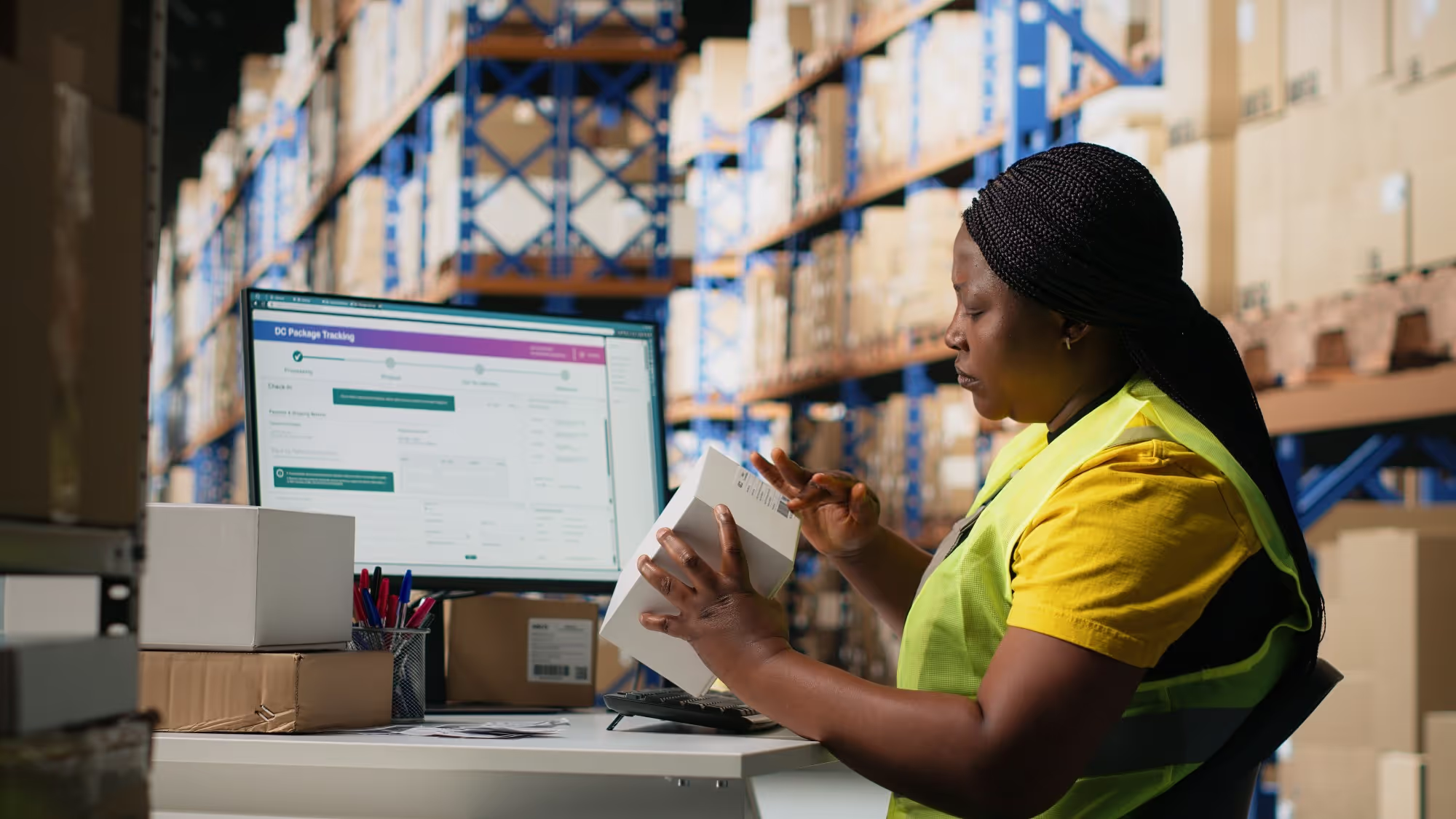
What Actually Happens Inside "Fulfillment" — and Where Each Cost Hides
Fulfillment is one of those words you hear constantly and rarely get defined. Every guide tells you to optimize it, but optimize what, exactly? Fulfillment isn't a single fee — it's a chain of physical steps your product moves through between the moment it arrives at a warehouse and the moment it lands on a customer's doorstep, plus the steps that happen when some of it comes back. Each link in that chain carries its own cost, and most of the margin sellers lose isn't in the one fee they're watching — it's in the three or four they've never bothered to name. This is a tour of the whole pipeline so you can see where your money actually goes, and which stage to fix when a SKU stops making sense.
The five stages every order passes through
Whether you use FBA, WFS, a third-party warehouse, or ship from your garage, the same five stages happen. The only thing that changes is who does the work and how the bill gets itemized.
- Receiving (inbound) — your units arrive, get counted, inspected, and shelved. The cost lives in the freight to get them there plus any per-unit receiving or check-in charge.
- Storage — your inventory sits on a shelf waiting to sell. You pay for the cubic space it occupies, usually per month, with steep penalties once stock ages past a threshold.
- Pick and pack — when an order comes in, someone (or a robot) retrieves the unit, boxes it, and adds packing material. This is the core 'fulfillment fee' most sellers focus on.
- Shipping (outbound) — the parcel travels to the customer. Inside a program like FBA or WFS this is bundled into the fulfillment fee; with self-fulfillment you pay the carrier directly.
- Returns and reverse logistics — a slice of every order comes back. It has to be received again, inspected, and then restocked, refurbished, or written off — each path with its own cost.
The cost sellers actually see
When a marketplace quotes you a 'fulfillment fee,' it's usually bundling pick, pack, and outbound shipping into one number that scales with the unit's size and weight. That's the headline figure, and it's the one most sellers plug into their math. Fair enough — it's the biggest single line. But quoting only that number is like pricing a road trip on gas alone and forgetting the tolls, the parking, and the tire that blew out. The fee you see is real; it just isn't the whole bill.
The costs sellers forget
These are the quiet ones — the lines that don't appear next to the product on a fee estimator but absolutely show up on your monthly statement:
- Storage, especially aged stock — monthly storage is modest until inventory sits too long, at which point long-term or aged-inventory surcharges stack on top and can dwarf the base rate.
- Inbound freight and prep — getting units to the warehouse, plus labeling, poly-bagging, and bundling, is a per-unit cost that erodes margin before a single sale happens.
- Returns processing — a returned unit costs you twice: you already paid to ship it out, and now you pay to take it back, inspect it, and often can't resell it at full price.
- Removals and disposal — clearing stock that won't sell isn't free; you pay per unit to have it shipped back to you or destroyed.
- Surcharges on awkward units — oversize, heavy, or very low-price items frequently carry extra handling fees that turn a thin-margin SKU into a money loser.
Why the pipeline view changes your decisions
Once you see fulfillment as a chain rather than a single fee, your choices get sharper. A bulky, slow-moving product isn't expensive because of one number — it's expensive because it eats storage for months, racks up aged-inventory surcharges, and carries a high pick-and-pack fee on every sale. A small, fast-selling item is the opposite: it barely touches storage and ships cheap. The pipeline view also tells you where to act. High storage cost? That's an inventory-quantity problem. High returns cost? That's a listing-accuracy or product-quality problem, not a logistics one. Naming the stage tells you which lever to pull instead of vaguely trying to 'cut fulfillment costs.'
Map the whole pipeline onto one product
- Start with your landed cost — what you paid for the unit plus inbound freight and any duties to get it to the warehouse.
- Add prep: labeling, bagging, or bundling, whether you do it yourself or pay a service.
- Add the marketplace fulfillment fee (pick, pack, outbound) for that unit's size and weight tier.
- Add a realistic monthly storage charge based on how long the unit typically sits before selling.
- Add a returns reserve — a per-unit estimate built from your category's return rate and what a returned unit actually costs you.
- Subtract that whole stack, plus the referral fee, from your sale price. What's left is your real margin — not the optimistic version that counted one fee.
See the true cost of fulfillment on every product before it eats your margin.
Explore the profit toolsFrequently asked questions
Is the marketplace fulfillment fee the same as my total fulfillment cost?
No, and assuming it is will quietly cost you money. The quoted fulfillment fee usually covers pick, pack, and outbound shipping. Storage, inbound freight, prep, returns processing, and removals are separate lines that don't appear next to the product but absolutely land on your monthly statement. Add them all to know your real cost per unit.
Which stage of the pipeline costs sellers the most?
It depends on the product. For small, fast-moving items the pick-and-pack fee dominates. For bulky or slow-moving items, storage — especially aged-inventory surcharges — often quietly becomes the biggest line. For products with high return rates, reverse logistics can erase the margin entirely. That's why you map the whole chain per SKU rather than assuming one stage is always the culprit.
Does this pipeline apply to Walmart and not just Amazon?
Yes. The same five stages — receiving, storage, pick and pack, outbound shipping, and returns — apply to Walmart Fulfillment Services and to any third-party warehouse. The fee names and tiers differ, but the structure is identical, which is why it's worth modeling both marketplaces with the same framework rather than treating them as unrelated.