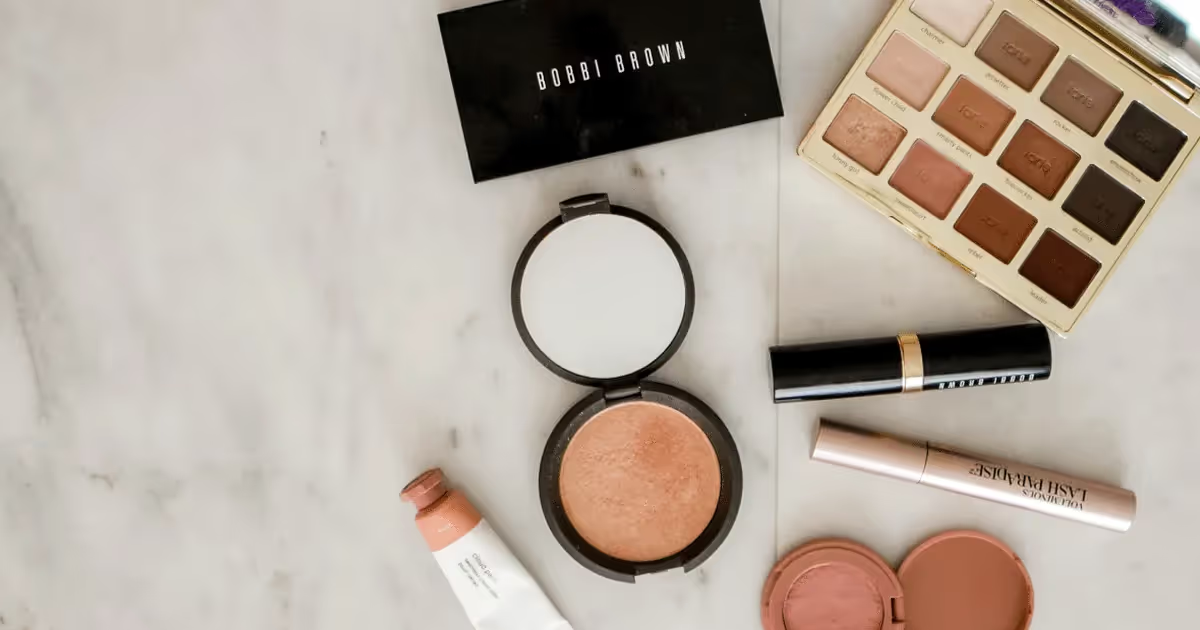
Selling Beauty and Personal Care: A High-Demand, High-Discipline Category
Beauty and personal care is one of the most attractive categories on Amazon and Walmart — high demand, strong repeat purchase, and customers who'll pay for quality. It's also one of the most demanding to compete in. Buyers research hard, trust is everything, and the category carries gating and compliance friction that keeps casual sellers out. That friction is part of why margins can hold up better here than in commodity categories, but only if you go in understanding what the shelf actually rewards.
What makes beauty different from a typical category
Beauty shoppers don't buy on a glance the way they might for a phone cable. They read reviews, compare ingredients, study before-and-after imagery, and weigh brand reputation. That means the listing has to work much harder: photography, ingredient transparency, and social proof aren't nice-to-haves, they're the purchase decision. The flip side is that customers who find a product they trust come back — repeat purchase in consumable beauty and personal care is a genuine advantage that rewards getting the first sale right.
The gating and compliance reality
Beauty and personal care often carry approval and documentation requirements, especially for anything applied to skin or ingested-adjacent. Plan for it rather than discovering it after you've bought inventory:
- Category or brand gating — some beauty sub-categories and brands are restricted, so confirm you can list a product before you source it.
- Authenticity documentation — invoices proving legitimate sourcing protect you against the inauthentic-product complaints that are common in beauty.
- Compliant labeling and claims — ingredient lists, net quantity, and claims that stay within the rules; over-promising a result is a fast route to suppression.
- Safety and ingredient restrictions — certain ingredients carry extra scrutiny or are restricted outright, which can affect what you're allowed to sell.
The practical rule mirrors any gated category: don't commit working capital to inventory you can't confirm you're able to list and keep live. A pallet of a hot serum you can't get approved is dead stock with a shelf life.
Winning the digital shelf
Because the buying decision is research-driven, the listing is where beauty is won or lost. Prioritize:
- Photography that sells the result — clean product shots plus context that shows texture, use, and outcome.
- Ingredient and benefit clarity — tell shoppers what's in it and what it does, in compliant language, without making them dig.
- Genuine social proof — reviews and ratings carry enormous weight in beauty; earn them the right way and protect them.
- Brand consistency — beauty buyers reward a coherent brand story across the listing, images, and any enhanced content.
This is a category where investing in content pays back, because the shopper is actively evaluating and a weak listing loses the sale to a stronger one even at a similar price.
Mind the margin under the glamour
Beauty products can look rich on price, but the category has its own cost load: compliant packaging, the content investment the shelf demands, expiry management on consumables, and a referral fee that for beauty often runs higher than the typical ~15% on lower-priced items. A product that pencils out on the headline price can lose its shine once you net out the real costs. As always, model it per SKU on net before you scale.
See the real net margin on beauty SKUs before you buy.
See plans and pricingFrequently asked questions
Is beauty a good category for a new seller?
It can be lucrative, but it rewards discipline. The demand and repeat-purchase economics are strong, but the gating, compliance, and content bar are real. A new seller does best treating approval and listing quality as the price of entry, confirming they can list a product before sourcing it, and modeling the full cost load — not just the headline price.
Why is the listing so important in beauty?
Because beauty shoppers buy on research, not impulse. They compare ingredients, study photos, and lean heavily on reviews before purchasing. A weak listing loses the sale to a stronger one even at the same price, so photography, ingredient clarity, and social proof do the actual selling in this category.
Do beauty products carry higher fees?
Referral rates vary by category and price, and beauty can run differently from the roughly 15% common on many lower-priced items — sometimes higher, sometimes tiered by price. Always confirm the current rate for your specific product and net it out, along with packaging, content, and expiry costs, before deciding the SKU is worth selling.