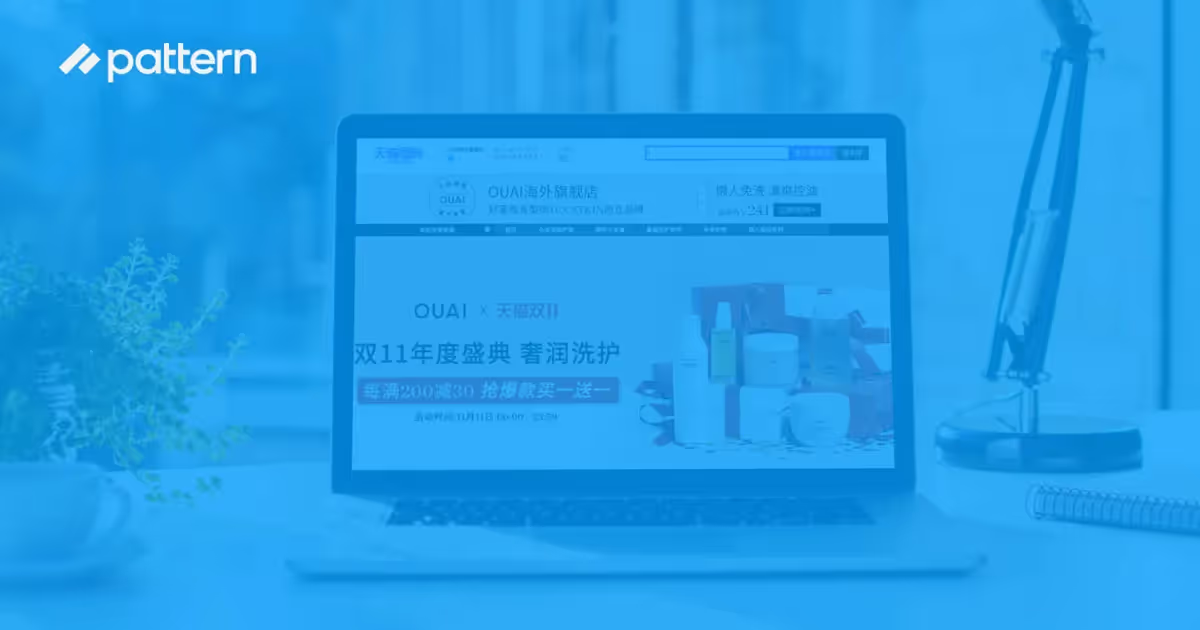
Thinking About a Tmall Global Flagship Store? What a Marketplace Seller Should Weigh First
China is the market everyone points at and very few sellers actually crack, and a Tmall Global flagship store is one of the cleaner ways in. It lets cross-border sellers reach Chinese shoppers without setting up a local company or holding inventory in-country — which on the surface sounds a lot like 'just another marketplace.' It isn't. The traffic dynamics, the cost of standing up a store, and the way shoppers find and trust you all work differently than they do on Amazon. Before you copy-paste your existing listings over, it's worth understanding what a flagship store really is and whether the math holds for your products.
What a flagship store actually is
On Amazon you list into a shared catalog and fight for the buy box on a product page that you don't fully own. A Tmall flagship store is closer to operating your own branded storefront inside a much larger mall — your brand gets a dedicated space, your own page templates, and a storefront shoppers navigate as 'your' shop rather than a generic product listing. Tmall Global specifically is the cross-border lane, built for brands selling into China from outside it, so you ship internationally rather than stocking domestically. That ownership cuts both ways: you get more control over how your brand presents, and you carry more responsibility for driving the traffic that fills it.
Traffic doesn't just show up
The single biggest mental adjustment for an Amazon seller is that opening a flagship store does not hand you a stream of shoppers. On Amazon, ranking organically for a high-volume keyword can carry a listing for years. On a marketplace built around branded storefronts and heavily merchandised shopping festivals, discovery leans far more on recruitment — actively pulling new shoppers into your store and converting them into followers who come back. You're effectively building an audience, not just a listing. That means a real plan for how a shopper first lands in your store, whether through on-platform advertising, festival placements, livestream and influencer activity, or off-platform demand you create yourself. If your whole growth model is 'rank and wait,' a flagship store will feel like an empty shop in a busy mall.
Recruiting and keeping followers
Because the store is built around your brand, the most valuable thing you accumulate isn't a single product's rank — it's followers. A shopper who follows your store is someone you can reach again at the next festival, which lowers the cost of every subsequent sale. So the early playbook is less about squeezing one product and more about recruiting an audience you can re-sell to. Practically, that looks like:
- A hero product worth following you for — one strong, well-reviewed item that gives shoppers a reason to opt in, not a thin catalog dump.
- Reasons to come back — new arrivals, bundles, and festival-only offers that reward followers instead of treating them like one-time buyers.
- On-platform content — the storefront, short video, and livestream formats that the marketplace rewards, rather than recycled Amazon copy that ignores local norms.
- A clear first-purchase incentive — something that converts a curious visitor into a follower and a buyer in the same session.
Run the cross-border unit economics before you commit
This is where a lot of 'China expansion' dreams quietly die, and it's the part you control. A flagship store carries setup and operating costs an Amazon listing doesn't — store deposits, annual fees, commission, and the marketing spend you'll need to recruit shoppers. Layer on cross-border shipping and the overhead of running a store in another language and time zone, and the all-in cost per order can look nothing like your domestic numbers. Before you sign up, rebuild the P&L from scratch: landed cost, platform fees, recruitment spend, and shipping, against a realistic selling price. The mistake is assuming your Amazon margin travels with the product. It doesn't — the cost structure is different enough that a product that's healthy at home can be underwater here, and the only way to know is to model it.
Who this is actually for
A Tmall Global flagship store rewards sellers who have a genuine brand, a hero product with strong reviews, and the appetite to invest in audience-building over months — not sellers looking for a quick incremental sales channel they can run on autopilot. If your strength is operational arbitrage and thin-margin volume, the recruitment-heavy model and added cost layers will fight you. If you've built something shoppers would actually follow and you can fund the audience-building, it's one of the few legitimate front doors into an enormous market. Either way, the decision should come down to a number — the modeled margin per order on this specific channel — not the size of the market in the headlines.
Pressure-test the margin on any product before you expand it to a new market.
Explore the profit toolsFrequently asked questions
Do I need a company in China to sell on Tmall Global?
No — the cross-border 'Global' channel is designed for brands selling into China from outside it, which is the whole reason it appeals to sellers who can't or don't want to set up a local entity. You'll still need to meet the platform's brand and documentation requirements, and you'll ship internationally rather than holding domestic stock, so factor that shipping cost and lead time into your numbers.
Will my Amazon listings and reviews carry over?
No. It's a separate platform with its own storefront formats, content norms, and review base — you start your reputation fresh. Recycling your Amazon copy and images verbatim tends to underperform, because the shopping experience and what shoppers expect to see are different. Plan to localize, not just translate.
Is a flagship store worth it for a single product?
Rarely. The model rewards building a followed audience you can re-sell to across festivals, so a one-SKU store struggles to justify the setup and recruitment cost. If you only have one product and no plan to expand the assortment, test demand through lower-commitment channels first and revisit a flagship store when you have a brand worth following.