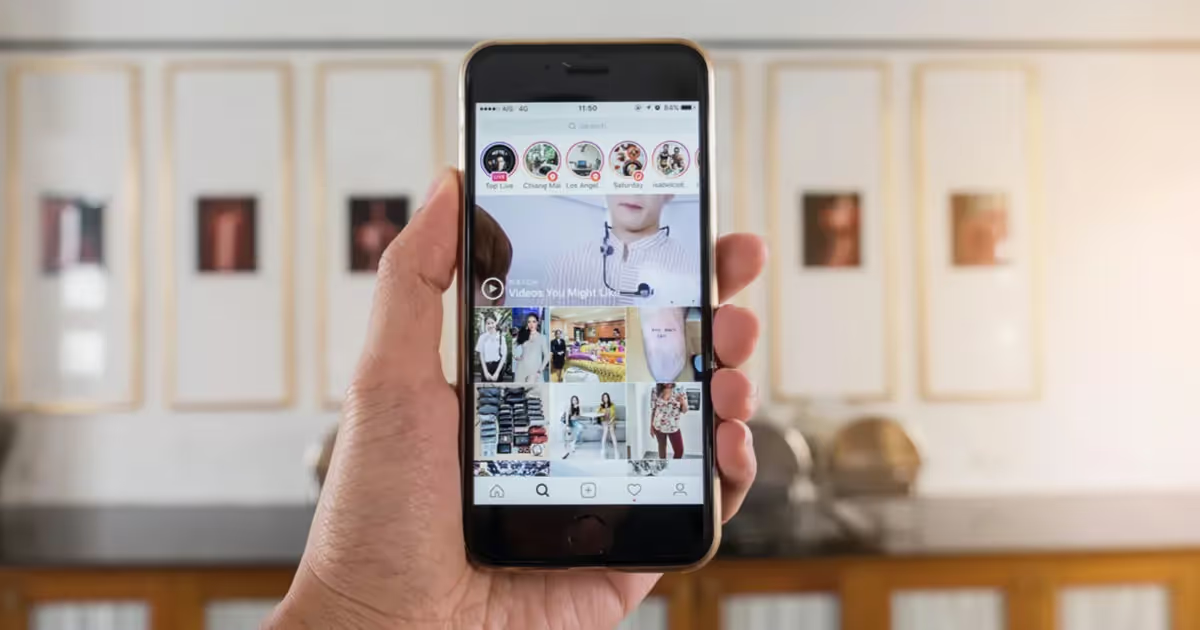
Social Discovery: Turning Instagram and Pinterest Interest Into Marketplace Sales
Instagram and Pinterest sit at the front of the buying journey for a huge range of products. Instagram is where shoppers discover something they didn't know they wanted — a scroll-stopping image or a creator's recommendation. Pinterest is where they research it, saving and comparing ideas weeks before they're ready to buy. Neither is primarily a checkout destination for most marketplace sellers; shoppers tend to complete the purchase where they trust the experience and the delivery. That split is the opportunity: these platforms generate intent, and your marketplace listing captures it. The seller who treats social as a demand engine feeding their detail page — rather than a place that has to close the sale itself — gets the upside without fighting the way people actually shop.
Two platforms, two jobs
Instagram and Pinterest aren't interchangeable, and treating them the same wastes both. Instagram drives discovery and impulse — it's where visual, lifestyle, and problem-solving products create demand from a standing start, often through creators. Pinterest behaves more like a visual search engine with a long planning horizon: people save ideas for projects, events, and purchases they'll make later, which makes it powerful for products tied to seasons, rooms, recipes, or occasions. Match your effort to the platform's job, and you stop pushing impulse content into a planning audience or vice versa.
Turn attention into listing sales
The goal is a clean handoff from social interest to a listing that converts. A few principles do most of the work.
- Send traffic to a bulletproof destination — Buy Box held, fast-shipping badge live, images and reviews ready to close a warm shopper.
- Match the landing to the intent — a high-intent click can go straight to the listing; colder discovery traffic may convert better via a Store page that warms it first.
- Tag every source — use attribution links so you can tell which platform and post actually drove sales, not just clicks.
- Lean on creators for trust — borrowed audience trust converts far better than a brand talking about itself.
- Let Pinterest work the long tail — content saved today can drive sales for months, so it compounds in a way Instagram's faster feed doesn't.
Measure it or don't spend on it
The mistake that kills social-driven selling is an untracked link. Send shoppers from a post to a plain listing URL and you have no idea whether the channel drove sales, detail-page views, or nothing — and you can't qualify off-platform traffic for any referral credit your brand registration offers. Use tagged attribution links for each platform and campaign so you can see the real path and credit the right source. Until you can measure it, treat social spend as an experiment with a fixed budget, not a committed channel.
Protect the margin on the traffic you buy
Paid social and creator partnerships have a cost, and that cost has to clear your unit economics. A campaign that drives a flood of clicks at a price you can't recover after fees is a hobby, not a growth lever. Before you scale a channel, confirm that the cost per acquired order plus any creative or commission cost still leaves a net profit per SKU. The point of social discovery is profitable demand — traffic you can't monetize above your breakeven is just expensive attention.
Confirm a social channel drives profitable orders before you scale the spend.
See the profit toolsFrequently asked questions
Should I try to sell directly on Instagram and Pinterest?
For most marketplace sellers, these platforms work best as discovery and research channels that feed your listing, not as primary checkout destinations — shoppers tend to complete purchases where they trust delivery and returns. Use social to generate intent and route it to a detail page that's ready to convert. Direct social checkout can make sense for some brands, but prove the demand first before you build out a second storefront.
How is Pinterest different from Instagram for sellers?
Pinterest behaves like a visual search engine with a long planning horizon — people save ideas weeks or months before buying, so content keeps driving traffic over time and suits seasonal or project-based products. Instagram drives faster discovery and impulse, often through creators. Match your content to each platform's job rather than recycling the same post across both.