How Much Your Star Rating Really Moves Sales — and How to Protect It
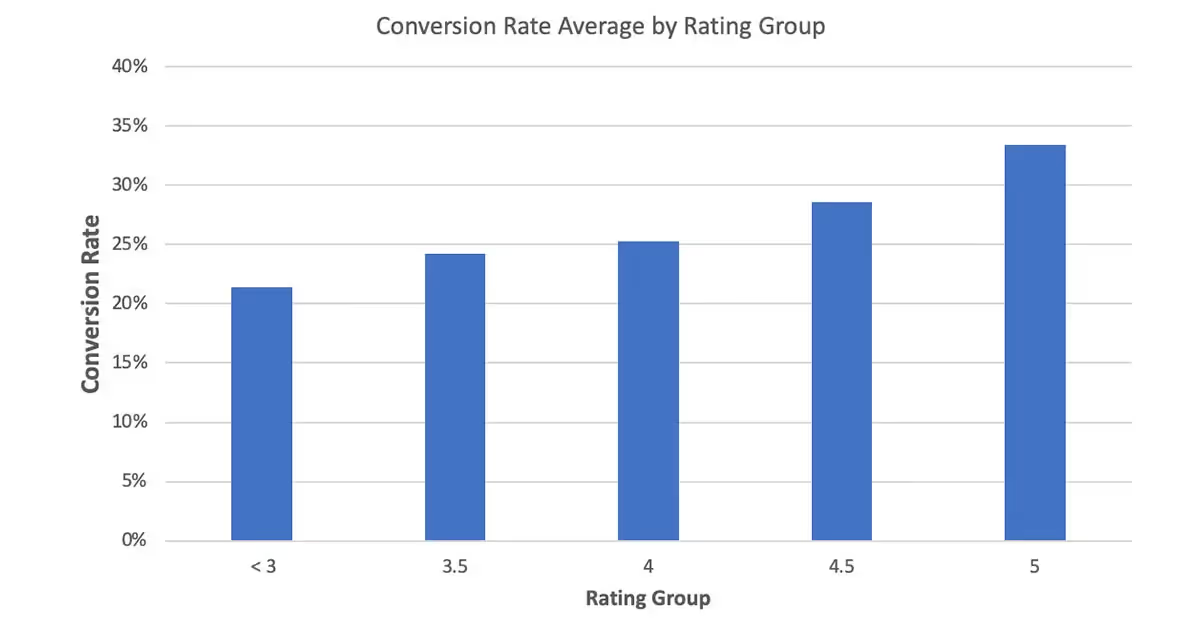
Sellers obsess over keywords and images, then treat their star rating as something that just happens to them. That's backward. The rating is one of the strongest conversion levers on the whole detail page, and because conversion feeds ranking, a higher rating quietly buys you traffic on top of the sales it directly wins. The difference between a low-4 rating and a high-4 isn't cosmetic — it shifts the share of shoppers who add to cart, and it compounds. Here's how ratings actually move the needle and the habits that keep yours where it belongs.
Why ratings compound instead of adding up
Shoppers use the star rating as a fast trust filter before they read a word of your copy. Below a certain threshold, many won't even consider the listing; above it, the rating reassures them enough to buy. That conversion lift doesn't just win the immediate sale — it raises the conversion rate that Amazon's search ranking rewards, so a stronger rating pulls in more organic traffic, which produces more sales and more reviews. A good rating is a flywheel: it earns conversions, conversions earn rank, rank earns traffic, and traffic earns more reviews. A weak one spins the same wheel in reverse.
The habits that keep a rating high
- Fix the product and listing mismatch — most one-star reviews come from a gap between what the listing promised and what arrived. Honest images and accurate copy prevent the disappointment that drives bad reviews.
- Use Amazon's official review request — the built-in request keeps you compliant while nudging satisfied buyers to leave the reviews that reflect reality.
- Respond to negative reviews within the rules — you can't pay for or manipulate reviews, but addressing a problem publicly and fixing it shows future shoppers you stand behind the product.
- Watch quality and packaging — damage in transit and defective units generate the harshest reviews; tightening prep and packaging protects the rating directly.
- Catch a sliding rating early — a sudden run of bad reviews often signals a batch defect or a listing change, and the sooner you catch it the less it costs.
Stay on the right side of the review rules
The temptation when a rating dips is to manufacture reviews, and it's the fastest way to get a listing suppressed or an account flagged. Incentivized reviews, review-gating that only solicits happy customers, and anything that looks like buying reviews all violate Amazon's policies. The durable path is unglamorous: make a product people genuinely like, ask for reviews through the official channel, and handle problems openly. A rating built honestly survives scrutiny; one built on manipulation is a liability waiting to detonate.
Protect the rating, protect the margin
There's a profit angle that's easy to miss. The same quality problems that tank a rating — damage, defects, mismatched expectations — also drive returns, and returns quietly erode the margin you thought you earned on every order. A defective batch shows up twice: once as falling stars, once as a return rate eating your net profit. Watching both together tells you when a product problem is costing you on two fronts, so you can fix it at the source instead of treating the symptoms one at a time.
See how returns and refunds are denting your real profit.
Check your net profitFrequently asked questions
How big is the conversion difference between a 4.2 and a 4.6?
The exact lift varies by category and price, but the direction is consistent and meaningful: shoppers convert noticeably better above the high-4 threshold, and the effect compounds through ranking. Rather than chase a precise number, treat every tenth of a star as worth protecting, because the gains stack across conversion and traffic.
Can I ask customers to leave a review?
Yes, through Amazon's official request mechanism, which is compliant and sends a neutral request to recent buyers. What you can't do is incentivize reviews, solicit only happy customers, or otherwise manipulate the outcome — those practices risk suppression of the listing or action against your account.
What should I do when my rating suddenly drops?
Treat it as a signal, not just bad luck. A sudden run of negative reviews usually points to a batch defect, a packaging failure, or a recent listing change. Read the new reviews for the common thread, check whether returns rose at the same time, and fix the underlying cause rather than trying to bury it under new reviews.