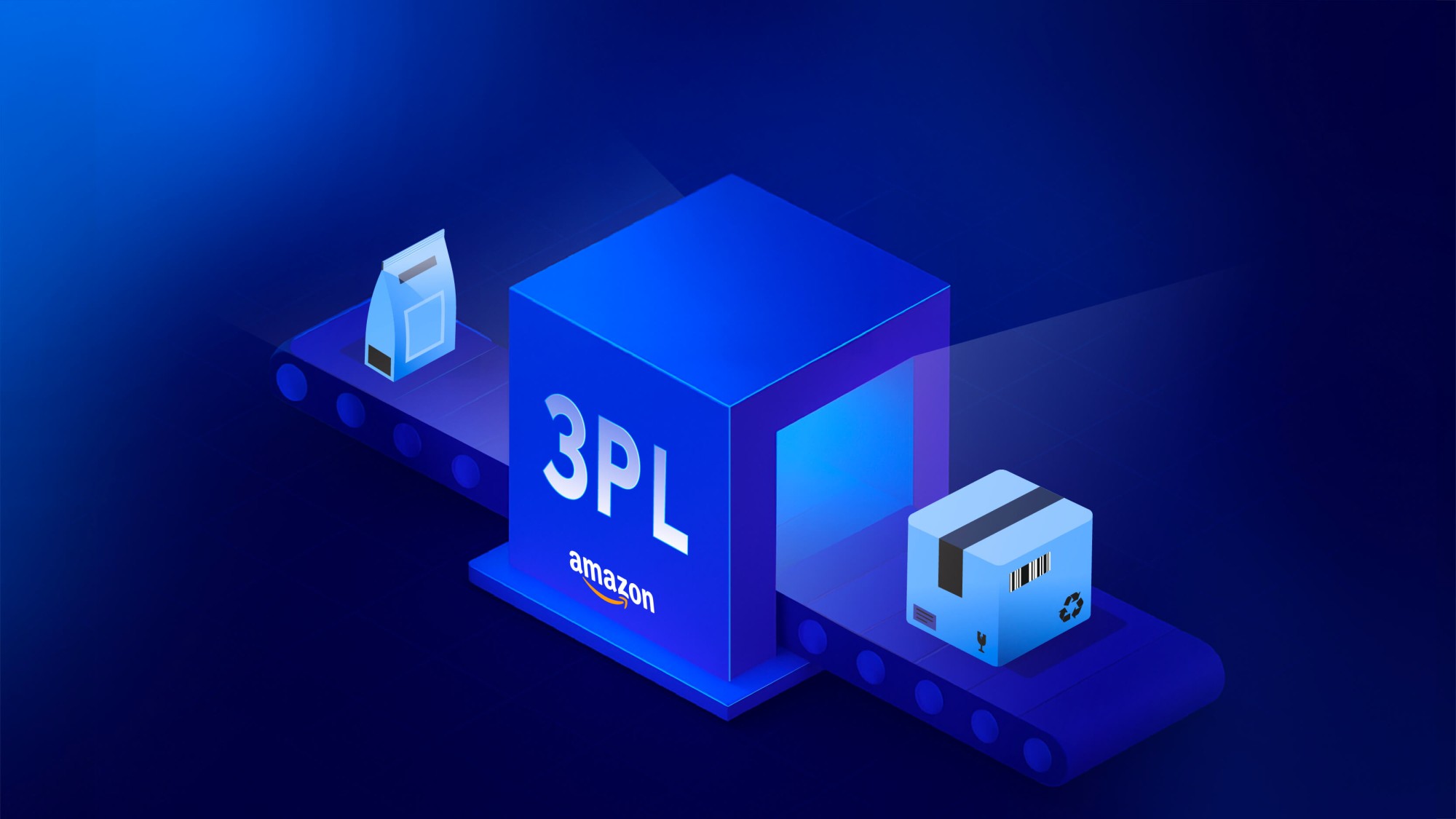
Using a Third-Party Logistics Provider (3PL) as an Amazon Seller: When It Pays Off
At some point most growing sellers hit the same wall: there's too much inventory to prep in a spare bedroom, FBA storage limits or fees make it expensive to ship everything to Amazon at once, and orders are coming in from more than one channel. A third-party logistics provider — a 3PL — is the usual answer. It's an outside warehouse that receives your bulk inventory, preps it, stores it, and ships it where it needs to go: into FBA in measured batches, or directly to customers for your off-Amazon and merchant-fulfilled orders. Used well, a 3PL buys back your time and smooths your inventory flow. Used carelessly, it adds a fee layer that quietly compresses already-thin margins. The question isn't whether a 3PL is good or bad — it's whether the cost it adds is less than the value it returns for your specific business.
What a 3PL actually does for a seller
The label covers a range of services, and you usually pick the ones you need rather than all of them.
- Receiving and inspection — takes delivery of your bulk shipments (often straight from a manufacturer or freight forwarder) and checks them in.
- FBA prep — labeling, poly-bagging, bundling, and packaging to Amazon's exact requirements so your inventory isn't rejected at the fulfillment center.
- Buffer storage — holds your reserve stock so you can send measured replenishments into FBA instead of paying to store months of inventory there.
- Direct-to-customer fulfillment — picks, packs, and ships your merchant-fulfilled, off-Amazon, and multichannel orders under your brand.
- Returns handling — receives and processes customer returns, inspects them, and restocks or disposes as instructed.
The three problems a 3PL solves
Sellers turn to a 3PL for one of three reasons, and it's worth being honest about which applies to you. The first is time — when prepping and shipping inventory yourself stops being a money-saving habit and starts being the bottleneck keeping you from growing. The second is FBA storage economics — when sending all your inventory to Amazon means paying premium storage and risking aged-inventory penalties, a 3PL lets you keep the bulk cheaper elsewhere and drip-feed FBA. The third is multichannel fulfillment — once you're selling on Walmart, your own site, or other marketplaces alongside Amazon, a single 3PL can fulfill all of it instead of you juggling separate processes. If none of these is a real pain yet, you probably don't need a 3PL — and adding one is just adding cost.
The hidden costs to watch
3PL pricing is rarely a single number, and the headline rate can hide the parts that actually add up. Expect to pay for receiving (often per unit or per carton), storage (per pallet, shelf, or bin per month), pick-and-pack (per order and sometimes per item), and outbound shipping on top. Some charge setup fees, minimums, or surcharges for special handling. None of this is unreasonable — but it stacks on top of Amazon's own referral and fulfillment fees, and on a thin-margin product the combined load can erase the profit. The danger is treating the 3PL as a convenience and never running the all-in math. A 3PL that makes a healthy-margin product easier to scale is a great investment; the same 3PL on a marginal product can be the thing that tips it into a loss.
Decide it product by product, with the real numbers
Whether a 3PL pays off isn't a yes-or-no for your whole catalog — it depends on the product. A bulky, slow-moving item where you're bleeding FBA storage fees might be dramatically cheaper held at a 3PL and replenished in small batches. A fast-moving, thin-margin item might not survive the extra per-unit handling. The way to know is to layer the 3PL's per-unit costs into your existing unit economics and see what's left after Amazon's fees and the 3PL's fees together. Do that across your range and a pattern usually emerges: a 3PL clearly earns its keep on some products and clearly doesn't on others. Let the math sort them rather than signing a blanket contract and hoping it nets out.
See which products can absorb a 3PL's costs and still profit.
Check your per-unit marginsFrequently asked questions
Do I need a 3PL if I already use FBA?
Not necessarily — they solve different problems. FBA fulfills your Prime orders; a 3PL typically sits upstream of it, holding bulk inventory cheaply, prepping it to Amazon's spec, and feeding FBA in measured batches so you're not paying premium storage on months of stock. A 3PL becomes worth it when FBA storage costs are biting, when prep has become your bottleneck, or when you're fulfilling orders across multiple channels. If none of those is true yet, FBA alone is usually fine.
How do I know if a 3PL is too expensive for a product?
Add the 3PL's per-unit costs — receiving, storage, pick-and-pack, and outbound shipping — on top of Amazon's referral and fulfillment fees, then check what's left of your unit margin. If the combined fee load leaves a healthy profit, the 3PL is earning its keep; if it pushes a thin-margin product toward break-even or below, that product is better handled another way. The decision is per-product, not catalog-wide.