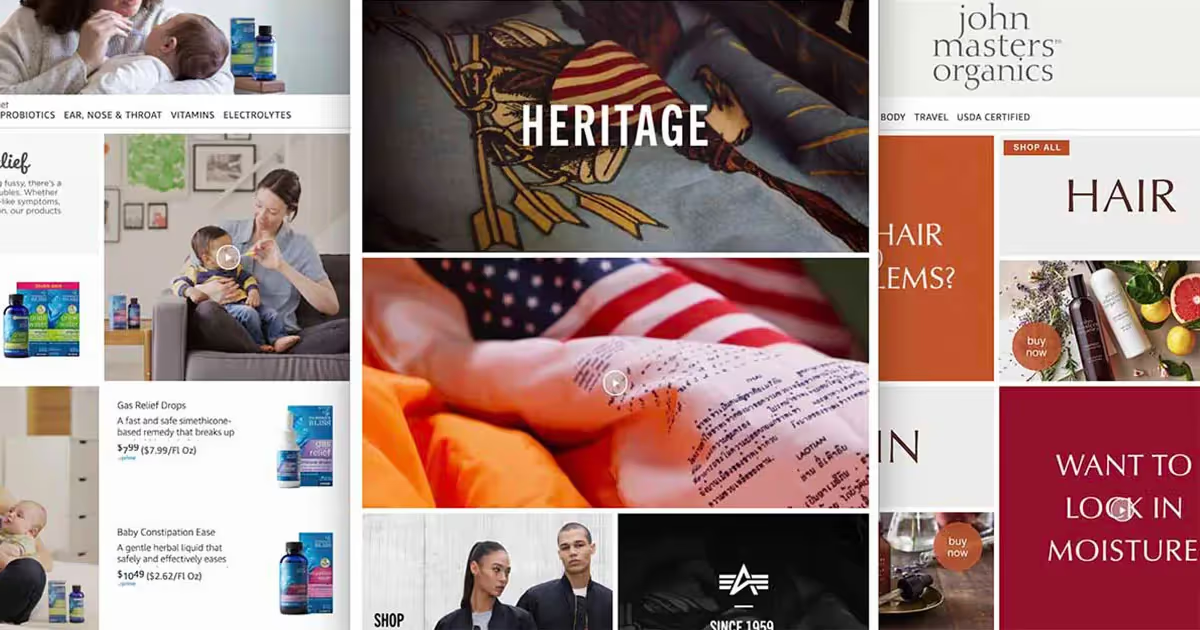
What Great Seller Storefronts Actually Do (and How to Copy Them)
Most sellers treat the Amazon Store as a checkbox: spin up a homepage, drop the logo on it, never look again. That's a waste of the only page Amazon gives you with no competitor ads, no Buy Box fight, and complete control over the narrative. The storefronts that actually move sales aren't the prettiest ones — they're the ones built like a focused mini-site, where every click pushes a shopper closer to buying. Here's what separates the storefronts that earn their keep from the ones that just sit there, and how to apply it to yours.
They lead with a job, not a brand film
A weak storefront opens with a giant lifestyle banner and a tagline nobody reads. A strong one answers a question in the first scroll: what do you sell, who is it for, and where do I go next. The shopper landed here from an ad, a Sponsored Brands headline, or your byline — they already have intent. Don't make them hunt. Put your hero products, your bestsellers, and a clear path into categories above the fold, then let the brand story support that instead of blocking it.
They're built like a navigable site, not a single page
The storefronts that convert use sub-pages the way a real site uses sections: a page per product family, per use case, or per collection, with a clean nav bar across the top. That structure does two things. It lets a shopper who wants one thing skip straight to it, and it gives you dedicated landing pages to send ads to — far more relevant than dumping everyone on the homepage. If your catalog is more than a handful of ASINs, a flat one-page Store is leaving money on the table.
Structure shoppers can follow
- A homepage that orients fast — hero products, top categories, and a single clear next step, not a wall of imagery.
- Sub-pages by use case or collection — so each ad can land on the most relevant page instead of the homepage.
- A persistent nav bar — let shoppers jump between sections without backing out.
- Bestsellers surfaced early — social proof and your highest-converting products shouldn't be buried three scrolls down.
- A consistent look across every tile — mismatched image styles read as amateur and erode trust.
They give ads a real destination
Sponsored Brands campaigns can route clicks to your Store, and that's where the storefront pays for itself. A shopper who lands on a tightly themed sub-page — "running gear," "travel mugs," "newborn essentials" — sees a curated set instead of one product, which lifts both basket size and the odds they buy something. The mistake is sending every campaign to the homepage. Match the ad's keyword theme to a sub-page and you turn a single-product click into a browse session.
They merchandise around seasons and events
The good storefronts aren't static. They swap the hero for the gift guide in Q4, surface the cooling products in summer, and feature whatever's about to spike. You don't need a redesign — a refreshed banner and a reordered shelf is enough to keep the page aligned with what shoppers are actually looking for that week. A storefront you set up once in 2023 and forgot is quietly costing you the seasonal lift everyone else is capturing.
They watch the numbers, not just the looks
Amazon gives Store-level insights — views, sales, and traffic by source. Use them. If a sub-page gets traffic but no sales, the merchandising or the products are wrong. If the homepage gets all the views and nothing else does, your nav is failing. Treat the Store like any other conversion surface: form a hypothesis, change one thing, watch what moves. The storefronts that compound are the ones whose owners actually read the report.
See which of your products deserve the spotlight before you build the page around them.
Explore the toolsFrequently asked questions
Do I need Brand Registry to build a Store?
Yes. The Amazon Store builder is a Brand Registry benefit, so you'll need an enrolled, registered brand to create one. If you're reselling other brands rather than selling your own, a Store generally isn't available to you — your effort is better spent on listing quality and Buy Box performance.
How often should I update my storefront?
Refresh the hero and featured shelves around major seasons and shopping events — at minimum quarterly, and more often if your category is seasonal. The full structure can stay stable; it's the merchandising on top that should move with demand.
Should every ad point to my Store or to product pages?
It depends on intent. High-intent, single-product keywords usually convert best straight to the product page. Broader or brand-level keywords do better landing on a themed Store sub-page where shoppers can browse a curated set. Test both and let the conversion data decide per campaign.